
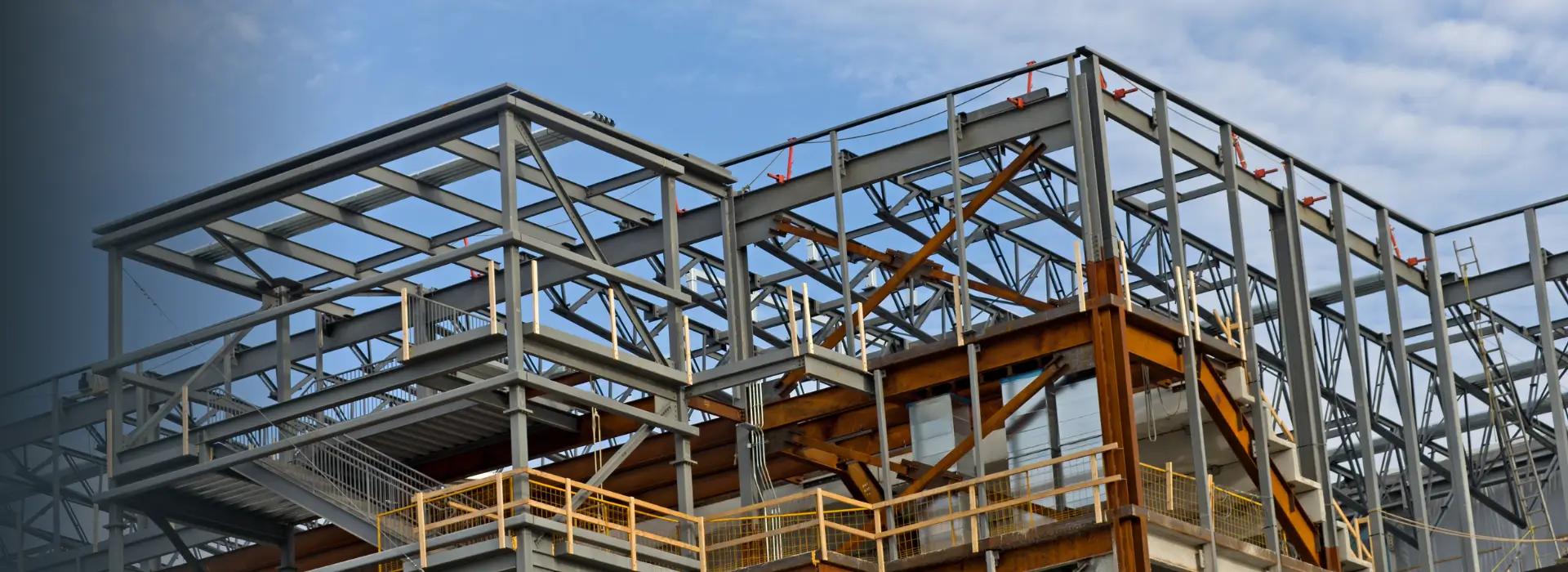
Heavy steel fabrication is used in projects where strength and safety are critical. Power plants, bridges, railway structures, and industrial equipment all depend on strong steel joints.
These joints are created using welding.
Welding is not just joining metal. It is a controlled process that ensures steel components become one strong unit. The quality of welding directly affects the strength and life of the structure.
In this blog, you will learn about the main welding techniques used in heavy steel fabrication, how they work, and where they are used.
What Is Welding in Steel Fabrication
Welding is the process of joining two or more steel parts by heating them and allowing them to fuse together.
Sometimes a filler material is added to make the joint stronger.
Simple explanation
Welding melts steel at the joint and lets it cool so the parts become one solid piece.
Why Welding Is Important in Heavy Fabrication
In heavy fabrication, steel structures carry high loads and face extreme conditions.
Welding ensures that the structure behaves like a single unit.
Why welding matters
- Creates strong permanent joints
- Handles heavy loads and stress
- Maintains structural stability
- Reduces the need for bolts or fasteners
Poor welding can lead to cracks, failure, or safety risks.
Types of Welding Techniques Used in Heavy Steel Fabrication
Different welding techniques are used depending on the thickness of steel, type of structure, and project requirements.
Arc Welding
What is arc welding
Arc welding uses an electric arc to generate heat and melt the steel.
It is one of the most common welding methods in heavy fabrication.
How it works
- Electric current creates heat
- Steel edges melt
- Filler material joins the parts
Where it is used
- Structural beams
- Bridges
- Heavy equipment
Why it is used
- Strong joints
- Suitable for thick steel
- Cost effective
MIG Welding
What is MIG welding
MIG welding stands for metal inert gas welding.
It uses a continuous wire electrode and shielding gas.
How it works
- A wire is fed through a welding gun
- Gas protects the weld from contamination
- Heat melts the metal
Where it is used
- Industrial fabrication
- Large scale production
- Medium to thick steel
Benefits
- Fast welding process
- Clean welds
- Easy to automate
TIG Welding
What is TIG welding
TIG welding stands for tungsten inert gas welding.
It uses a tungsten electrode to create the weld.
How it works
- A non consumable electrode creates heat
- Filler material may be added manually
- Shielding gas protects the weld
Where it is used
- Precision work
- Thin sections
- High quality fabrication
Benefits
- Very clean welds
- High control
- Strong finish
Submerged Arc Welding
What is submerged arc welding
This method uses a continuous wire and a layer of flux that covers the weld.
How it works
- Arc is formed under a layer of flux
- Flux protects the weld from air
- Produces deep and strong welds
Where it is used
- Heavy steel plates
- Pressure vessels
- Large structures
Benefits
- High welding speed
- Deep penetration
- Suitable for thick materials
Flux Cored Arc Welding
What is flux cored welding
This method is similar to MIG welding but uses a special wire filled with flux.
How it works
- Wire melts during welding
- Flux creates a protective gas
Where it is used
- Outdoor welding
- Heavy fabrication projects
Benefits
- Works well in windy conditions
- High efficiency
- Strong welds
Shielded Metal Arc Welding
What is this method
This is also known as stick welding.
It uses a coated electrode to create the weld.
How it works
- Electrode melts and joins the metal
- Coating produces gas to protect the weld
Where it is used
- Construction sites
- Repair work
- Heavy structures
Benefits
- Simple and reliable
- Works in tough conditions
- Does not need complex equipment
Comparison of Welding Techniques
Welding Method | Speed | Strength | Best Use |
Arc Welding | Medium | High | Heavy structures |
MIG Welding | High | Medium to high | Industrial fabrication |
TIG Welding | Low | Very high | Precision work |
Submerged Arc | High | Very high | Thick steel plates |
Flux Cored | High | High | Outdoor work |
Stick Welding | Medium | High | Site work |
Factors That Affect Welding Choice
Engineers choose the welding method based on several factors.
Key factors
- Thickness of steel
- Type of structure
- Working environment
- Required strength
- Cost and speed
Choosing the right method ensures better quality and performance.
Common Welding Defects
Welding must be done carefully. Mistakes can lead to defects.
Common defects
- Cracks
- Porosity
- Incomplete fusion
- Weak joints
These defects can reduce the strength of the structure.
Importance of Skilled Welding
Welding is a skilled task.
Even with advanced machines, the quality depends on the welder.
Why skill matters
- Ensures strong joints
- Prevents defects
- Improves safety
- Maintains quality standards
Certified welders follow strict procedures to ensure proper results.
Safety in Welding
Welding involves heat, electricity, and gases.
Proper safety measures are important.
Safety practices
- Use of protective equipment
- Proper ventilation
- Safe handling of tools
- Regular inspection
Safety protects workers and ensures smooth operations.
Role of Welding in Infrastructure Projects
Welding is essential in building infrastructure.
It is used in
- Bridges
- Power plants
- Industrial equipment
- Railway systems
Without proper welding, these structures cannot function safely.
Conclusion
Welding is one of the most important processes in heavy steel fabrication.
It connects steel components and ensures that structures are strong and stable.
Different welding techniques are used depending on the project requirements.
From arc welding to advanced methods, each technique plays a role in modern engineering.
Understanding these techniques helps ensure better quality, safety, and performance in construction and industrial projects.
