
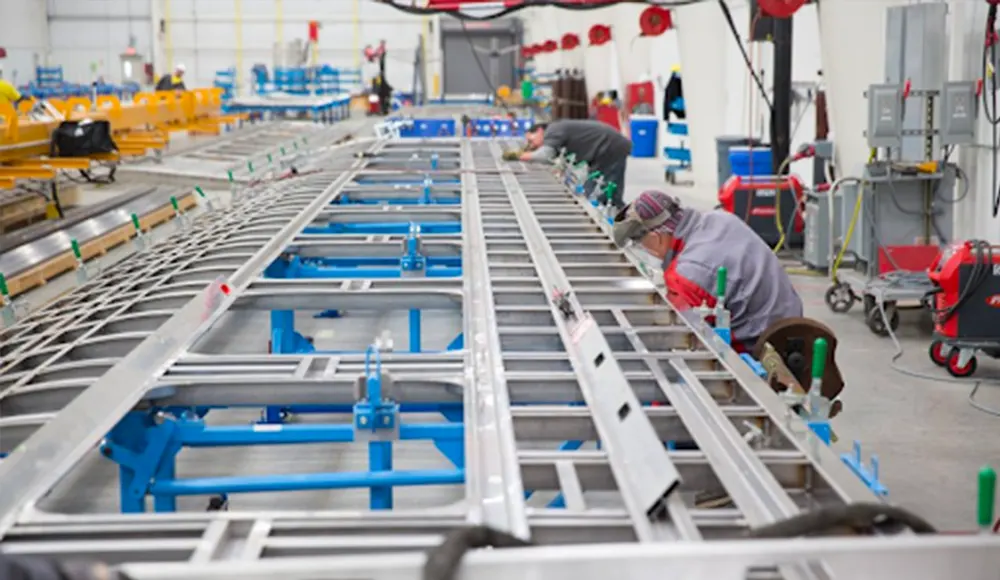
Power plants are complex systems. They generate electricity by converting energy from fuel, steam, or other sources. To make this possible, many large and heavy components must work together with high precision.
These components do not come ready to use. They are built through a detailed engineering process called fabrication.
Fabrication plays a critical role in manufacturing power plant equipment. It ensures that every component is strong, accurate, and able to perform under high temperature and pressure.
In this blog, you will understand how fabrication supports power plant equipment manufacturing and why it is essential for safe and efficient operations.
What Is Fabrication in Power Plant Equipment
Fabrication is the process of cutting, shaping, and assembling metal parts to create equipment and structures.
In power plants, fabrication is used to build equipment that handles extreme conditions such as heat, pressure, and heavy loads.
Simple explanation
Fabrication turns raw metal into usable equipment for power plants.
Why Fabrication Is Important in Power Plants
Power plants operate under demanding conditions.
Equipment must be strong, reliable, and accurate.
Fabrication ensures that all components meet these requirements.
Key reasons
- Handles high temperature and pressure
- Ensures structural strength
- Maintains safety standards
- Improves performance of equipment
Without proper fabrication, power plant systems cannot function safely.
Types of Equipment Manufactured Using Fabrication
Fabrication is used to manufacture many parts in a power plant.
Boilers
Boilers are used to generate steam.
Fabrication role
- Building pressure vessels
- Creating strong welded joints
- Ensuring leak proof structure
Turbine Components
Turbines convert energy into electricity.
Fabrication role
- Manufacturing support structures
- Creating precise components
- Ensuring alignment
Pressure Vessels
Pressure vessels store fluids under pressure.
Fabrication role
- Forming steel plates
- Welding and assembly
- Testing for safety
Heat Exchangers
Heat exchangers transfer heat between fluids.
Fabrication role
- Building tubes and shells
- Ensuring proper sealing
- Maintaining efficiency
Structural Steel Framework
Power plants require large steel structures.
Fabrication role
- Building frames and supports
- Handling heavy loads
- Ensuring stability
Fabrication Process in Power Plant Equipment Manufacturing
Fabrication follows a series of steps to ensure quality and safety.
Step One Design and Engineering
Engineers create detailed designs for each component.
Includes
- Load calculations
- Material selection
- Design drawings
This step ensures the equipment meets performance requirements.
Step Two Material Selection
Materials must handle extreme conditions.
Common materials
- Carbon steel
- Alloy steel
- Stainless steel
Material choice affects strength and durability.
Step Three Cutting and Forming
Raw materials are shaped into required forms.
Processes
- Cutting
- Rolling
- Bending
This prepares components for assembly.
Step Four Welding and Assembly
Parts are joined together using welding.
Importance
- Creates strong joints
- Ensures leak proof systems
Welding must follow strict standards.
Step Five Inspection and Testing
Fabricated components are tested before use.
Methods
- Visual inspection
- Non destructive testing
- Pressure testing
This ensures safety and reliability.
Step Six Surface Treatment
Components are treated to prevent corrosion.
Methods
- Coating
- Painting
This increases lifespan.
Importance of Precision in Fabrication
Power plant equipment must operate with high accuracy.
Why precision matters
- Ensures proper fit of components
- Improves efficiency
- Reduces risk of failure
Even small errors can affect performance.
Role of Welding in Power Plant Fabrication
Welding is a key part of fabrication.
Why welding is critical
- Connects heavy components
- Maintains structural strength
- Prevents leakage
High quality welding ensures safe operation.
Quality Control in Fabrication
Quality control ensures that all components meet standards.
Key checks
- Material verification
- Weld inspection
- Dimensional accuracy
Strict quality control improves safety.
Safety Considerations
Fabrication must follow safety guidelines.
Safety measures
- Use of certified materials
- Proper welding procedures
- Regular inspection
Safety is critical in power plant operations.
Challenges in Fabrication for Power Plants
Fabrication in power plants is complex.
Common challenges
- Handling large components
- Maintaining precision
- Working with high temperature materials
Skilled engineers and proper systems help manage these challenges.
Benefits of Fabrication in Power Plant Manufacturing
Fabrication offers several advantages.
Key benefits
- Strong and reliable equipment
- High accuracy
- Long service life
- Efficient performance
These benefits support smooth plant operations.
Comparison of Fabrication Impact
Aspect | Impact of Fabrication |
Strength | Improves structural integrity |
Precision | Ensures accurate fit |
Safety | Reduces risk of failure |
Efficiency | Improves equipment performance |
Future of Fabrication in Power Plants
Fabrication is evolving with new technology.
Trends
- Automated welding
- Digital design tools
- Advanced materials
These advancements improve quality and efficiency.
Conclusion
Fabrication plays a vital role in power plant equipment manufacturing.
It transforms raw materials into strong and reliable components that can handle extreme conditions.
From boilers and turbines to structural frameworks, fabrication ensures that every part performs safely and efficiently.
Without proper fabrication, power plants cannot operate effectively.
